
All posts
-
The PhD Student: Melania
A fun and fulfilling student life is something that every aspiring university student looks forward to, but sometimes, it doesn’t work out that way…many may end up feeling isolated, disregarded, overwhelmed, may struggle socialising, or ultimately feel unable to take action that leaves lasting improvements in any of these domains. This can lead many to struggle with completing their academic work, and risk eventually quitting their dream degree because of a low quality of life.

My PhD Project – Future Socially Sustainable Student Housing (FLUSH)
A fun and fulfilling student life is something that every aspiring university student looks forward to, but sometimes, it doesn’t work out that way…many may end up feeling isolated, disregarded, overwhelmed, may struggle socialising, or ultimately feel unable to take action that leaves lasting improvements in any of these domains. This can lead many to struggle with completing their academic work, and risk eventually quitting their dream degree because of a low quality of life.
A lot of these experiences may not have anything to do with the students themselves, but with a campus environment failing to provide opportunities for the kinds of fulfilling experiences that are necessary for a student’s wellbeing. Even when a university wants to be as welcoming as possible to the students, the design of their spaces may tell a different story. Despite efforts to provide as many helpful resources as possible, it is not always clear what exactly about it is preventing students from feeling that they really belong in these spaces.
My research is about finding out how we can design spaces that nurture a sense of belonging, to make sure that no student is prevented from engaging in the kind of university life they dream of having because of a poor environment.
A lot of it starts with student housing, the place where you return to at the end of a long day on campus. It is important to be able to feel “at home” in your own house, so that is the space I am focusing on. Student housing is also often many people’s first home away from their families, so making sure it is a good place to live in really matters for that time of transition. It also matters for returning students and postgraduates – what would make you choose to live in student housing again? What would your student house need to be like to really make you feel that you are part of your university community? That is what I am exploring.
This is something that I am doing together with the students here at Halmstad University, as well as in collaboration with some of the companies who oversee the campus spaces and student housing buildings in Halmstad. Every higher education institution is different – they each have their own story and may need different things for their students to flourish. So, with sensitivity towards this, I am looking at how students currently live and try to connect at university already. Based on this knowledge, I try to find the best ways to work together to envision and create future spaces that students would love to be in.
Hopefully, learning to create a lively environment where students can feel well, have a good time studying, and be able to meet and connect with one another, will make these spaces be something that makes more students delighted to be part of their university story, instead of struggling because of them. This is what I hope my research would bring to the future of student housing. 🙂
-
The PhD Student: Introducing Camilla Häggroth
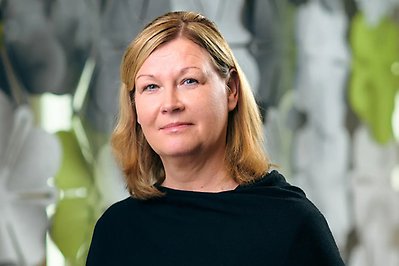
Camilla’s research explores whether GenAI can democratize access to justice by acting as a digital lawyer – available anytime, to anyone, for free. I study how this shift could transform individuals, institutions, and society itself.
- What problem are you trying to solve, and why should people care?
My PhD project explores how artificial intelligence and other emerging technologies are changing the legal profession and its role in society. Legal help can be expensive, difficult to understand, and not equally available to everyone. At the same time, AI-driven legal tools are starting to reshape how legal services are offered. This raises an important question: can digital innovation make legal support more accessible and fairer, or might it create new risks and inequalities? This matters because access to justice is a key part of a democratic society. If new technologies can reduce barriers linked to cost, language, and geography, they could help more people understand and defend their rights.
- What are you actually doing to tackle it?
The project focuses on Sweden’s leading family law firm and the first to introduce a consumer-facing ‘Digital Lawyer’. I study how this innovation is developed, regulated, and integrated into legal practice. My research combines interviews with lawyers, developers, managers, policy makers, and users, together with observations of workshops and meetings, and analysis of internal and regulatory documents. I am particularly interested in how AI changes professional roles, business models, legal expertise, and ideas of trust, ethics, and legitimacy in a traditionally conservative field.
- What difference could this make?
This research can deepen our understanding of how AI can be used responsibly in legal services. It may offer practical guidance for law firms, technology developers, and policymakers on how to balance innovation with ethics, accountability, and public trust. In the longer term, it could help shape digital legal tools that not only improve efficiency but also support social justice and widen access to justice.
Leave a Reply
-
Field trip to Transition Lab in Gothenburg
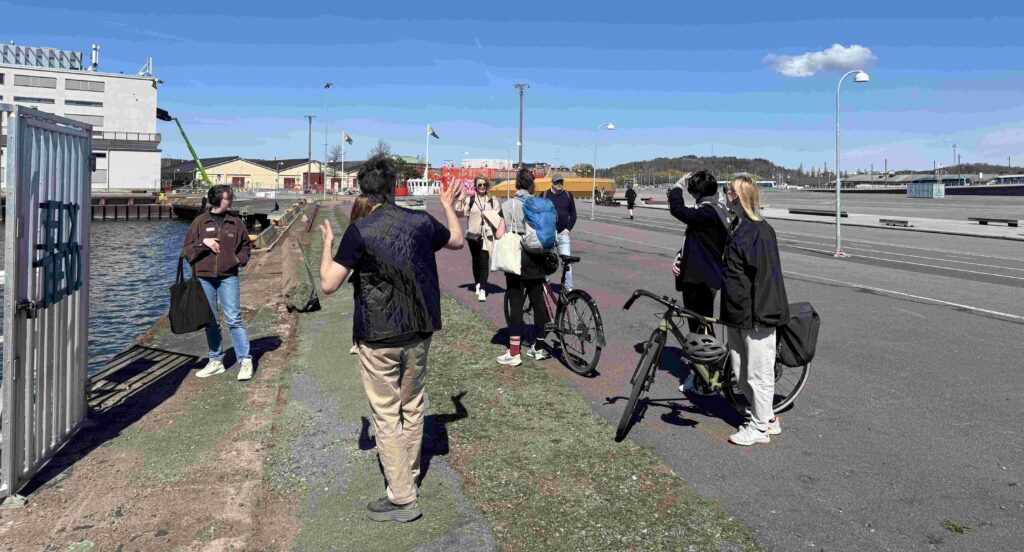
During our visit to the transition lab in Frihamnen, organised by Lab Futures Sweden (FUSE), participants from the City of Gothenburg, the City of Helsingborg, Halmstad University, Gothenburg University, and Chalmers University of Technology came together to explore how transition labs can support more sustainable and inclusive ways of living through practice. The visit focused on experiencing and understanding concrete ways of working on inclusion, prototyping, collaboration, and methods for citizen dialogue and co-creation, as well as on how such a lab can grow and evolve and how different actors contribute to its development. We learned about examples of non-profit, collaborative initiatives engaging diverse target groups. We learned that long-term work in Frihamnen has created opportunities for young people, including those with functional variations, to participate in activities such as sailing. At the same time, youth from across the city are involved in work within Jubileumsparken, all contributing to a shared ambition of creating a place where everyone feels welcome and can actively take part in shaping and developing the space. The work is a prime example of how transition labs can function as open, evolving environments that enable experimentation, participation, and collective learning across sectors.
Leave a Reply
-
The REBEL PhD Student: Roy
1. What problem are you trying to solve, and why should people care?
AI is rapidly becoming part of UX designers’ everyday work. It can help generate design concepts, speed up repetitive tasks, and spot patterns in large-scale data. That sounds promising, but also unsettling: as AI takes on more tasks, how do designers avoid over-relying on it, and how might it influence designers’ creativity, ownership, and professional development? These questions become even more urgent in high-stakes contexts such as truck interaction design, where design decisions can influence safety-critical systems and long-term sustainability goals. In such contexts, designers cannot simply trust AI outputs at face value. They need support that is useful, but also transparent, grounded in real-world practice, and open to scrutiny.
2. What are you actually doing to tackle it?
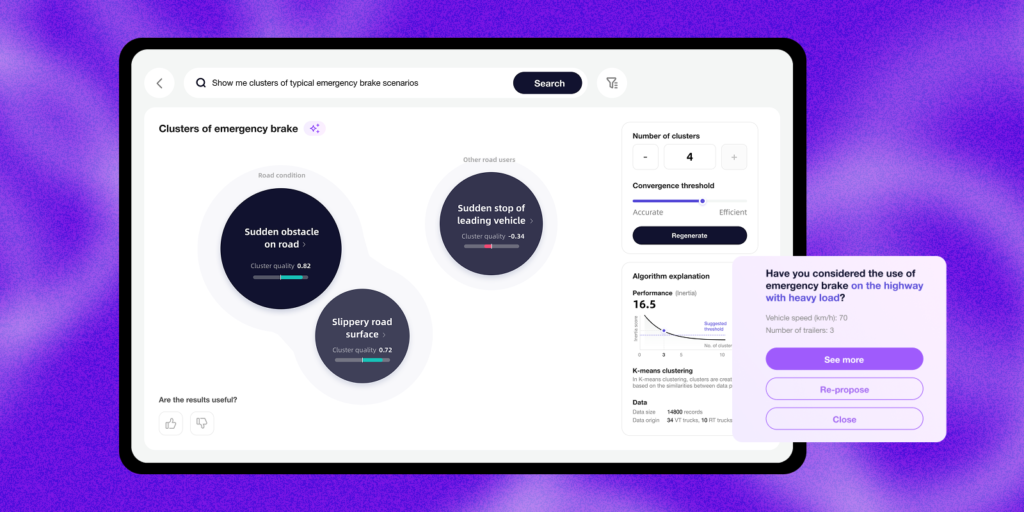
My project explores how AI tools can be designed to support meaningful collaboration between designers and AI. I adopt a human-centered approach and work closely with professional designers in truck interaction design to understand what they need from AI, what they expect from it, and how they actually engage with it. To explore this, I carried out interviews, observations, and engaged designers in co-designing and evaluating an AI-supported prototype. Across these studies, AI-supported data sensemaking became the central focus, informing high-stakes design decisions with user scenarios derived from real-world data.
3. What difference could this make?
Right now, we are still quite far from the kind of designer–AI collaboration we often imagine. Human collaboration involves communication, shared goals, negotiation, and mutual support, while AI is still limited in its ability to participate in that kind of relationship. This is why the design of AI tools matters so much: AI can be powerful, but it can also be harmful if it is introduced in ways that reduce human judgment, hide uncertainty, or encourage over-reliance. In the short term, my work shows how AI can help designers explore user scenarios in large-scale data and identify where deeper qualitative research is needed. In the longer term, it contributes to a better understanding of the elements that shape the dynamics of designer–AI collaboration and of what must be designed thoughtfully to support responsible use in high-stakes contexts.
Leave a Reply
-
The REBEL PhD Student: Nicole Norris
My PhD project reflects my work in Canada at the intersection of non-urban and semi-rural place-led participatory design and social innovation. It explores how we design better ways for communities to shape their own liberatory futures.
This work contributes to the field of Informatics by reframing how we understand social innovation and its role in system change within the context of the discipline. Rather than treating social innovation as a series of isolated interventions, my research will position social change as an ongoing, relational process that requires new ways of thinking and new types of shared infrastructure to mobilize information.

In this framing, the challenge is not simply to design better solutions, but to design the conditions through which diverse actors can continuously make sense of complexity together. This shifts the focus from outputs to processes, and from organizations working in silos to more collaborative forms of coordination across social, economic, and institutional actors.
My research explores game-making, using the Design Games Framework, as a methodological bridge between design and system spaces. This approach offers an alternative to dominant models of socio-technical innovation that rely on abstraction, linear planning, or data-driven optimization. Through experiential and participatory methods, it engages situated forms of knowledge production where complexity can be explored directly rather than simplified. In these contexts, participants can surface interdependencies, test assumptions, and experiment with new forms of coordination that are difficult to access through discussion or analysis alone.
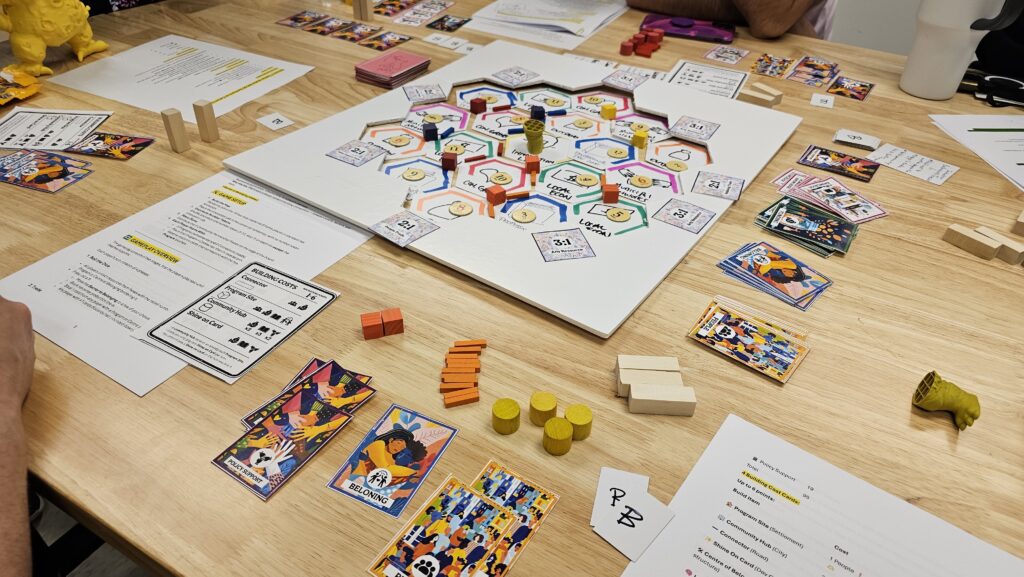
In doing so, this research aims to contribute to a new methodological direction for social innovation, one that supports more adaptive, inclusive, and place-responsive forms of coordination. It also aims to extend the definition of social innovation within the field of Informatics by emphasizing relational and experiential dimensions of system design, where knowledge is not only represented, but embodied.
Leave a Reply
One response to “The REBEL PhD Student: Nicole Norris”
-
Hi Nicole,
Your research project sounds amazing and highly relevant to our professional master programs in social sustainability at Roskilde University. I am the head of this program 🤓 Have you already developed a game that we could apply in the program? Would love to catch up! You now have a standing invitation to Roskilde University – maybe we could organise a seminar!? Best, Marta Padovan-Özdemir
-

Leave a Reply