April 2026

  • The REBEL PhD Student: Roy

    1. What problem are you trying to solve, and why should people care?

    AI is rapidly becoming part of UX designers’ everyday work. It can help generate design concepts, speed up repetitive tasks, and spot patterns in large-scale data. That sounds promising,  but also unsettling: as AI takes on more tasks, how do designers avoid over-relying on it, and how might it influence designers’ creativity, ownership, and professional development? These questions become even more urgent in high-stakes contexts such as truck interaction design, where design decisions can influence safety-critical systems and long-term sustainability goals. In such contexts, designers cannot simply trust AI outputs at face value. They need support that is useful, but also transparent, grounded in real-world practice, and open to scrutiny. 
    2. What are you actually doing to tackle it?

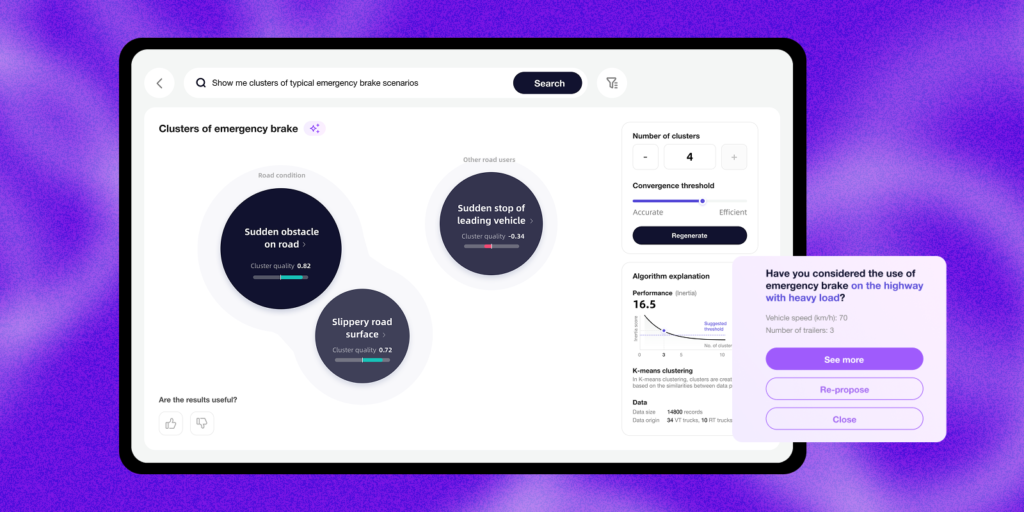
    My project explores how AI tools can be designed to support meaningful collaboration between designers and AI. I adopt a human-centered approach and work closely with professional designers in truck interaction design to understand what they need from AI, what they expect from it, and how they actually engage with it. To explore this, I carried out interviews, observations, and engaged designers in co-designing and evaluating an AI-supported prototype. Across these studies, AI-supported data sensemaking became the central focus, informing high-stakes design decisions with user scenarios derived from real-world data.

    3. What difference could this make?

    Right now, we are still quite far from the kind of designer–AI collaboration we often imagine. Human collaboration involves communication, shared goals, negotiation, and mutual support, while AI is still limited in its ability to participate in that kind of relationship. This is why the design of AI tools matters so much: AI can be powerful, but it can also be harmful if it is introduced in ways that reduce human judgment, hide uncertainty, or encourage over-reliance. In the short term, my work shows how AI can help designers explore user scenarios in large-scale data and identify where deeper qualitative research is needed. In the longer term, it contributes to a better understanding of the elements that shape the dynamics of designer–AI collaboration and of what must be designed thoughtfully to support responsible use in high-stakes contexts.

    Leave a Reply

    Your email address will not be published. Required fields are marked *


  • The REBEL PhD Student: Nicole Norris

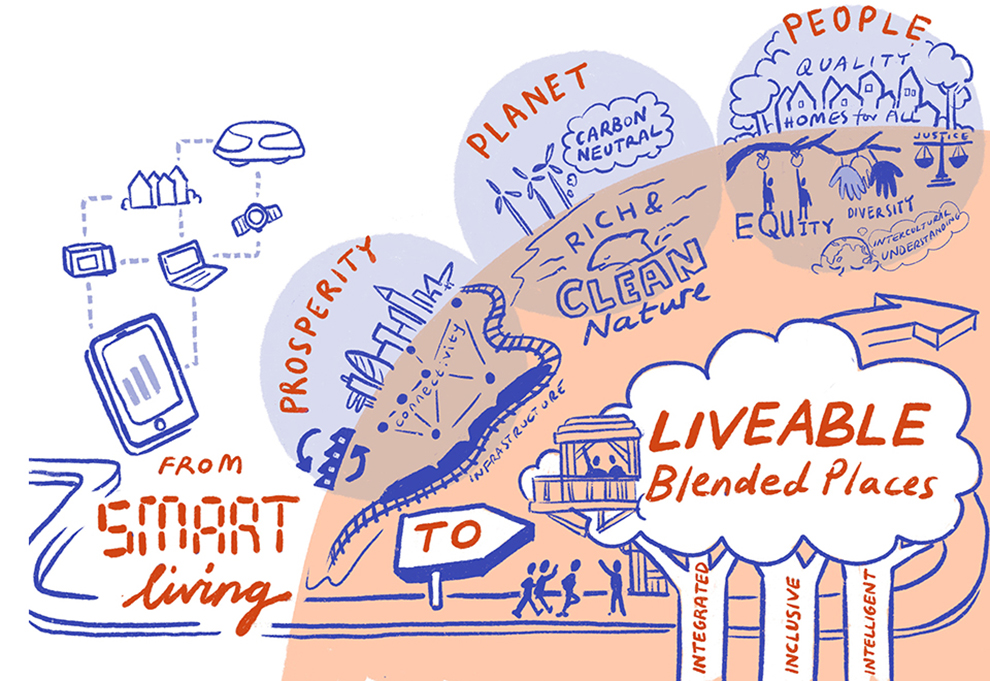
    My PhD project reflects my work in Canada at the intersection of non-urban and semi-rural place-led participatory design and social innovation. It explores how we design better ways for communities to shape their own liberatory futures.

    This work contributes to the field of Informatics by reframing how we understand social innovation and its role in system change within the context of the discipline. Rather than treating social innovation as a series of isolated interventions, my research will position social change as an ongoing, relational process that requires new ways of thinking and new types of shared infrastructure to mobilize information.

    Nicole Norris, REBEL PhD Student

    In this framing, the challenge is not simply to design better solutions, but to design the conditions through which diverse actors can continuously make sense of complexity together. This shifts the focus from outputs to processes, and from organizations working in silos to more collaborative forms of coordination across social, economic, and institutional actors.

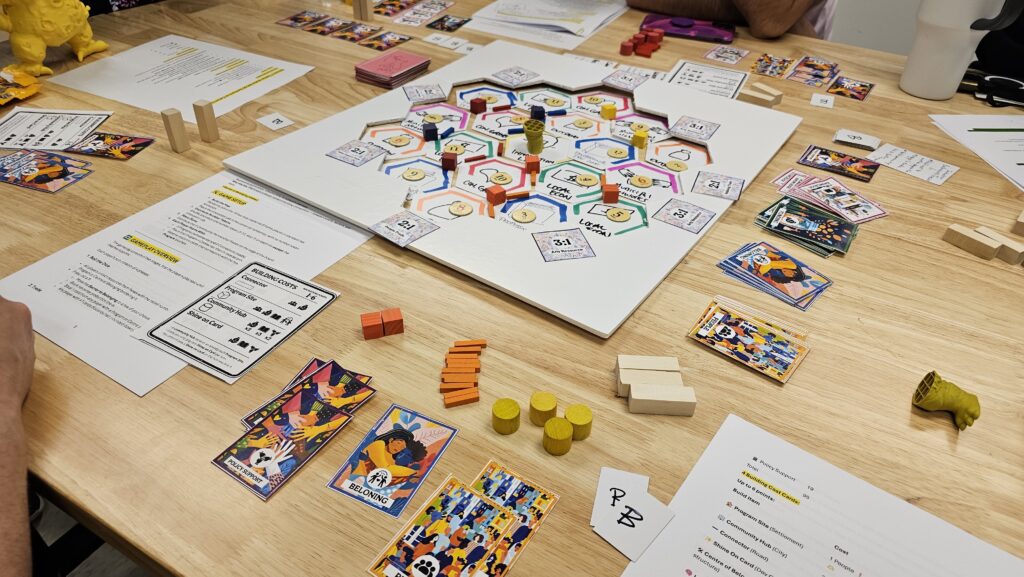
    My research explores game-making, using the Design Games Framework, as a methodological bridge between design and system spaces. This approach offers an alternative to dominant models of socio-technical innovation that rely on abstraction, linear planning, or data-driven optimization. Through experiential and participatory methods, it engages situated forms of knowledge production where complexity can be explored directly rather than simplified. In these contexts, participants can surface interdependencies, test assumptions, and experiment with new forms of coordination that are difficult to access through discussion or analysis alone.

    Game-based canvas to explore and experiment with assumptions and new perspectives.

    In doing so, this research aims to contribute to a new methodological direction for social innovation, one that supports more adaptive, inclusive, and place-responsive forms of coordination. It also aims to extend the definition of social innovation within the field of Informatics by emphasizing relational and experiential dimensions of system design, where knowledge is not only represented, but embodied.

    Leave a Reply

    Your email address will not be published. Required fields are marked *


  • What is the REBEL Open Space?

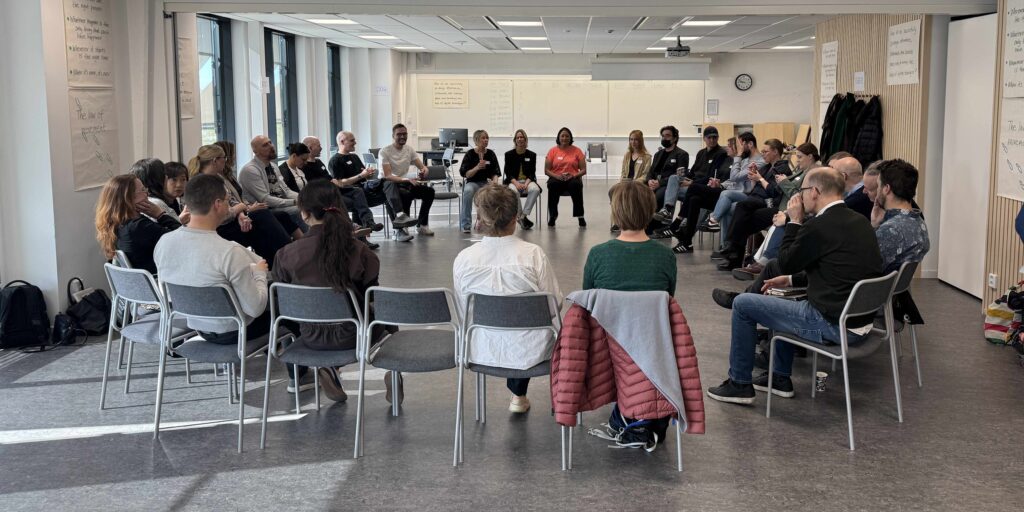
    Photo: Open Space 2025

    Every year, REBEL organises an Open Space workshop[1] to explore our common goals in the REBEL research program and investigate what we can do the coming years to reach them!

    The goal with this workshop is to bring together the REBEL collective of researchers, developers, funders, interested private and public actors, and communities to explore the directions we want to go together and come up with a prioritised and co-created list of what we will develop. The workshop is facilitated by the Open Space expert Pernilla Luttropp 

    Our ambition with organising this is to create a vibrant and friendly opportunity to network across disciplines and sectors with similar interests in co-creating concepts for socially sustainable future living and responsible innovation. This is the REBEL way of bringing in a reference group.


    [1] The key feature of Open Space Technology is its emphasis on self-organization and participant-driven agenda setting, where attendees have the freedom to propose, join, and lead discussions based on their interests and expertise.

    What is REBEL? Here is short video LINK

    What is REBEL Open Space? Here is a short video LINK

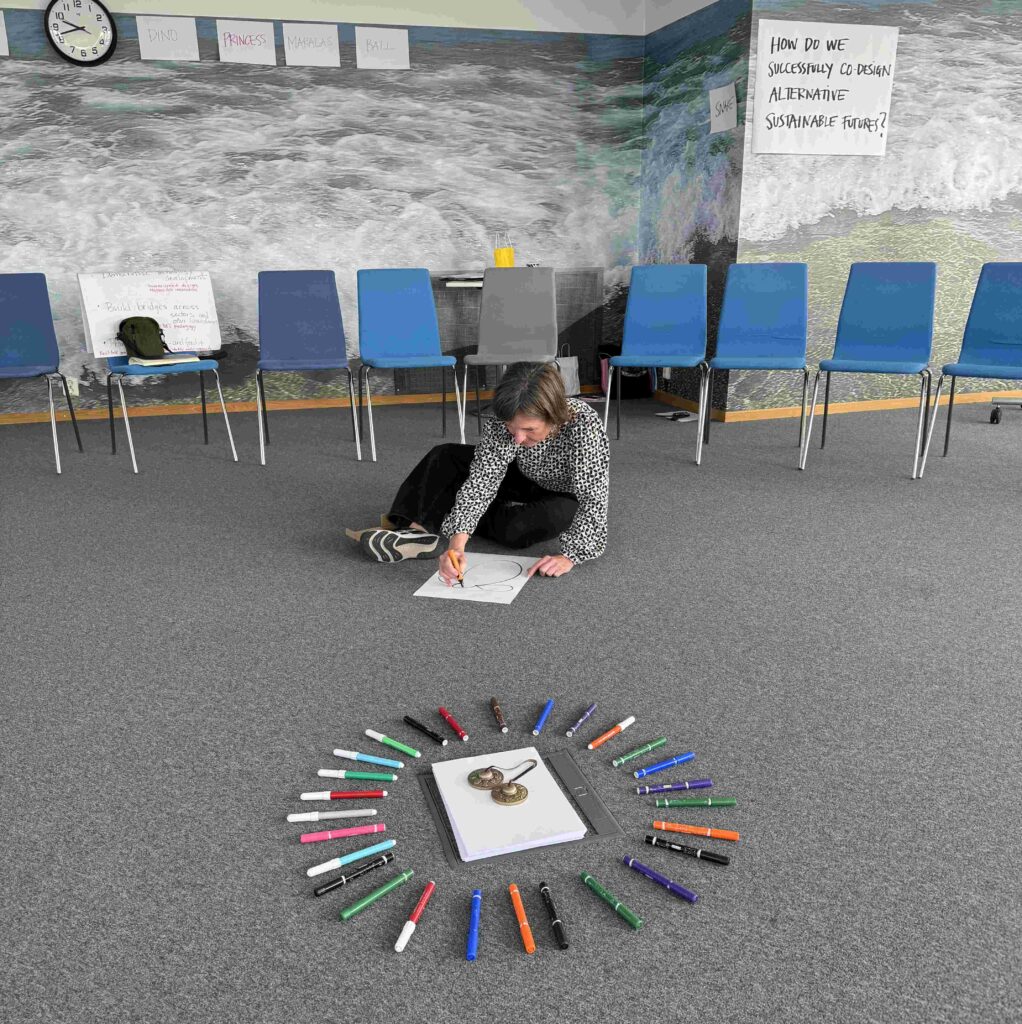
    Photo: Pernilla is getting ready for facilitating the REBEL Open Space 2024

    Leave a Reply

    Your email address will not be published. Required fields are marked *